


Last week’s post addressed the idea of questioning our faith and touched on the issue of deconstruction. I sought to help those who were questioning their faith to have a good foundation from which to begin to question. Today, I want to address some questions that may have come up from the last post and offer some hopefully helpful answers.

Question One: How do we handle cases when our friends or family members tell us that they are deconstructing?
A friend reached out to me after reading last week’s post and told me about her friend who seemed to be questioning her faith, and how it is that she might help her without worsening the situation. This got me thinking about how we can respond to such circumstances. Firstly, deconstruction as I understand it, cannot be an easy process to accept and more to that confess. In many cases, people have been brought up in Christian contexts, inheriting, as it were, the faith of their parents. To come to a point of questioning the very things that determined so much of our life must be hard. So when a friend or family member confesses that they feel as though they need to deconstruct or that they are in the journey of deconstructing their faith, hear them out. Try not to be too quick to judge them as being unbelievers. Be attentive to ask and hear what has led them to this point. Try not to be too quick to offer quick answers. These might be like offering a band-aid to someone with a broken leg – insensitive and unhelpful in the long run.
Secondly, pray for them and if they’ll allow it, with them. The solution to this is not dependent on man. It is God who opens minds and hearts to know and trust him. He, therefore, must be the one who works in the life of our friend or family member. People are not persuaded by well-articulated arguments or eloquence. They are cut to the heart as a work of the Holy Spirit. Our place therefore, is to firstly pray for God’s grace to be at work even before we think of sharing any wisdom we might have. Our wisdom cannot save but God can. Pray for a soft heart that will be willing to hear from God, not a hard heart that will reject him. Pray for a heart willing to submit to God and hear even the hard answers. Pray for preservation from the Evil One and his deceptive schemes, and for the triumph of the Truth.
Thirdly, seek to find out from them what their expectations are. The truth is, open as we might think ourselves, we always have a ‘theory’ of how we expect things to go. Because of this, we have a course of action that we will resort to, to take us down the path we hope for or anticipate. Sometimes, asking about their expectations will surprise them because they may not have thought about it. Often those who say that they are deconstructing do not actually have a game plan. They just know their faith has been challenged and they’re not sure they know where to go next. Where this is the case, it might be helpful to suggest that they have a game plan. This is useful because we can point them in the direction of Christian authority – the Bible.

I’ve found that when people are deconstructing, they think that the best thing is to stay away from ‘Christian’ things. They’ll avoid church, they won’t read their Bibles, they won’t pray. These things feel like siding with what is broken and doubtful. But in essence, these are the very things that they need. It is in reading the Bible corporately and individually that we hear God speaking. It is in the Christian community that we hear the truth spoken to us in love and see the gospel believed and live out. It is through prayer – lament and questioning, that we can commit everything to the Lord and seek his intervention and voice. We therefore, need to help those deconstructing to lean into these things rather than run from them. We can be part of leading them down the path towards the true answers.
Fourthly, we are to be generous with our time and energy to help them in their pursuit of truth. We can offer ourselves as buddies for them on their journey. In this way, we can try and help them ask the right questions (yes, there are good questions and bad questions to ask). We can help them look for the answers in the most beneficial manner, rather than being open to any and every answer that can be offered. Maybe, we can take time to read the Bible with them one-to-one, trusting God to make the answers clear. By spending time together, we will also offer them an opportunity to see the gospel believed and lived out where they have felt and seen the gospel not taken seriously.
In this way, we can become beacons of light for our friends and family members. When they feel surrounded by darkness and doubt, we can provide a helping hand to lead them to the light by God’s grace. We can point them to the truth and spend time with them working out the answers to their deep-seated questions. “A friend loves at all times, and a brother is born for adversity.” (Proverbs 17:17). We can be as the friend who loves at all times rather than the brother born for adversity. Rather than get into unprofitable arguments, we can simply and patiently point them to the truth, praying that God in his mercy, would turn them to himself. In this way, deconstruction will not lead to unbelief but reconstruction of firmer foundations for their faith. May God help us!
Question Two: How do we handle the unfortunate hypocrisy that is there in some church contexts that are part of the reason that people start deconstructing in the first place?
The truth is, we have all seen or heard of so-called Christians found living in clear hypocrisy to the faith they claim to confess. We have even seen news documentaries that have investigated greedy and corrupt church leaders and sexually immoral pastors. There have been investigative reports that have found key ‘Christian’ leaders guilty of sexual and emotional abuse. In our own experience, we’ve probably encountered ‘Christians’ who preach water but drink wine; preaching purity while sleeping around, preaching integrity while stealing church funds. What do we do about this unfortunate hypocrisy? How do we deal with the damage it causes in leading others astray and into paths of deconstruction?
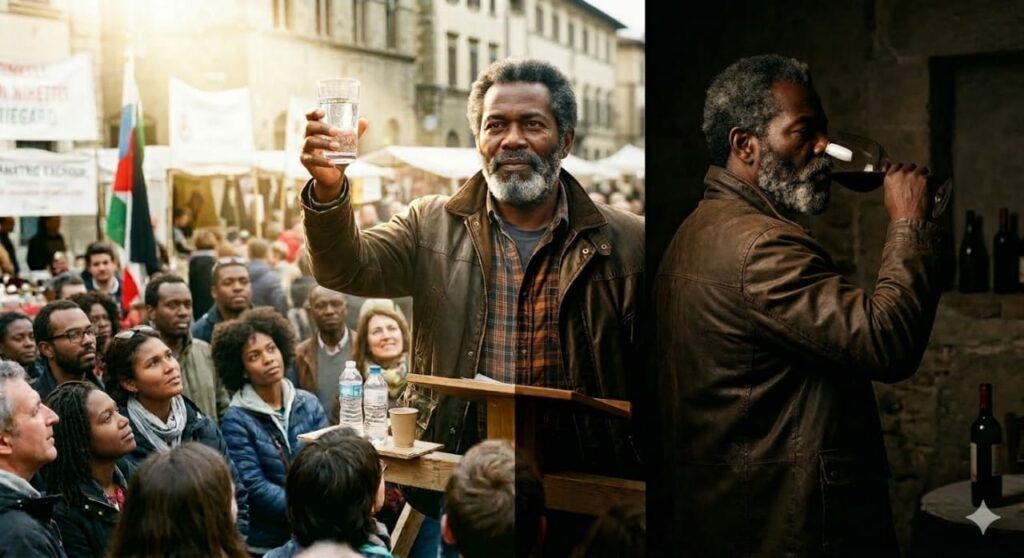
Well, we cannot throw out the baby with the bath water. . . We cannot say, “The gospel has failed because Christians are sinners”. The gospel is for sinners. We cannot say, “I quit church because it’s full of sinners”. The church is God’s hospital is for the sin-sick! To use a common phrase, it’s like saying you quit a gym because it had too many fat people there. That’s the right place for such people to be. Granted there should be greater evidence of the Spirit’s work in people’s lives, but spiritual progress is not linear. Neither is it proportionate to the amount of knowledge we have.
Salvation is a work of grace in us that also requires our labor in taking hold of that grace. Let’s consider Paul’s words in Philippians 2:12-13, “work out your own salvation with fear and trembling, for it is God who works in you, both to will and to work for his good pleasure.” It is not a mutually exclusive choice between God working and us working. It is both of us working. Piper says, “God’s work does not make our work unnecessary; it makes it possible”[1]. We are able to change because we labor to take hold, by faith and deed, what God has already done and is doing in us, through our union with Christ, by the help and empowerment of the Holy Spirit. We choose to agree with God’s grace at work for us and in us. I think this is something more Christians need to understand.
This means that we will learn to watch our own lives first and foremost. We should desire to apply to ourselves the truth in conformance with Philippians 2:12-13: Am I working out my own salvation with fear and trembling? How am I conforming my life to the gospel? Am I living out every aspect of my life for Jesus’ pleasure? Am I too busy being bothered that others are not doing this, without reference to myself? If we answer these questions honestly, then we will likely find that we come up short in some way; we are all hypocrites because we are all sinners. Because of this reality, we ought to be more patient and gracious when (not if) we see others fail. We may need to call some people out for their disobedience of God, but never with any sense of pride that we are better, because we are not! We can only ever really answer for ourselves, so let’s get preoccupied with our own faithfulness.
God does not affirm sin, he hates it. He has worked to deal with it firmly through Jesus’ death and resurrection, but is yet to deal with it finally and so we must wait until Jesus returns as Judge. Until then, sin is present in the world and even believers fall into it. We fail daily because we are still clothed in this flesh that loves sin. Because of this, the church will continue to have sin-sick people, and hypocrisy will still exist (because it exists in each individual Christian). This should call us to turn to God for more of his grace, rather than conclude he has failed. We ought to stand firm to keep working out our salvation with fear and trembling as God helps us and pray that others will do the same.

Question Three: Is all skepticism deconstruction? If I have questions and doubts about the Christian faith, can I be said to be deconstructing?
Skepticism is not all bad. There is a healthy skepticism that leads us to being more deliberate in getting clear on what the Bible says on different issues. But there is an unhealthy skepticism that leads to a lack of certainty in anything. This is the dangerous kind of skepticism that can lead us away from God than towards him. We need to beware of where we are and how we respond. As the previous post highlighted, I do think asking questions is good and healthy, but only if we are starting on the solid foundation that God is there, He has spoken in the Bible and we can trust Him to reveal Himself to us through His Word. If however, we doubt and break apart even the foundation that is meant to support us – doubting God’s existence, revelation and trust in His goodness and kindness, then we are likely deconstructing in the worst way possible because we will have nowhere to stand for stability. God welcomes us to ask questions, but to sit and read our Bibles for the answers.
[1] “Foreword,” in Habits of Grace: Enjoying Jesus through the Spiritual Disciplines (Wheaton, Illinois: Crossway, 2016), 12.