


We’ve spent some time thinking about suffering. We’ve thought about the importance of developing a theology of suffering and used Job’s particular story to think about some important aspects of suffering especially our understanding of who God is. Suffering is guaranteed as long as we live in this broken world, but more than that, as Christians we are guaranteed suffering as a vital part of our faith as it has been for God’s people through the Bible.
In Job’s case, it was God who set the course for Job to suffer. It is God who asked the Adversary, “Have you seen my servant Job?” and set the stage for Job’s suffering. While God is not the one who causes Job’s suffering, He does choose it for Him, as a means of proving his faith. But all the while, even as He allows the devil to try Job, He puts him on a leash. The devil cannot go beyond what God has allowed. The devil, is God’s devil, useful in God working out His good purposes.
Job’s friends help us to understand categories we have when thinking about suffering, and their limitations. We cannot say that only the wicked suffer, because life in this broken world proves otherwise. Also, we can clearly see that Job, a man whom God and the narrator testify is upright and righteous, suffers according to God’s purposes. Their accusations of Job being a wicked man, full of sin are false and prove that they are men who would rather deny reality than review their worldview. We ought to do better in thinking about the greatness of God’s sovereignty, the brokenness of this world and the reality of God’s purposes in testing the faith of His saints.
But there is still more to learn from the book of Job. There’s a young man who wants Job and his friends to have an even higher view of God and then there is what God has to say about all that has happened and been said.
The young man with wisdom
Somewhere in the midst of Job’s laments and his friends responses, there has been a young man who has sat and heard all that has been said. His name is Elihu and he is distressed by all that he has heard. As a young man, he would not have been permitted to speak until the older men had finished speaking and after that happens, he steps onto the stage to speak. He says two notable things. Firstly, he rebukes the older men, then secondly, he makes a case for a bigger, holier view of God.
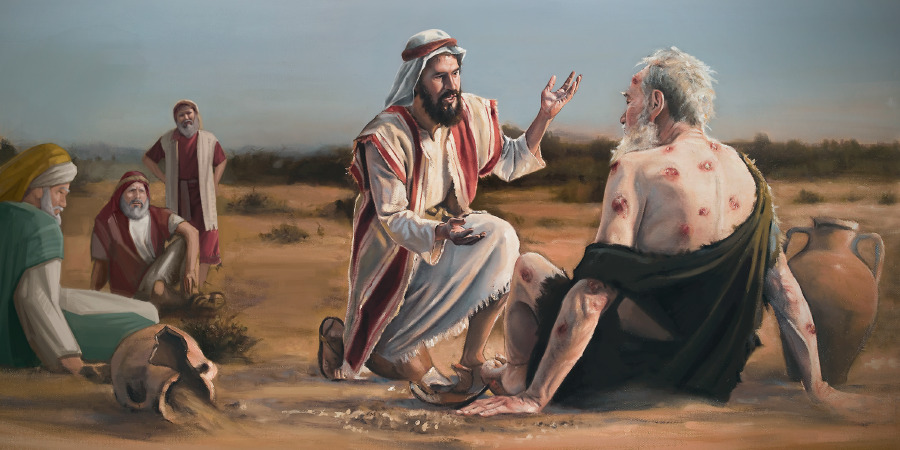
He opens by expressing his anger at Job. As he sees it, Job has sought to justify himself rather than God (33:8-13). In as much as Job may not have sinned in his speech about God, he seems to have been more concerned with upholding his righteousness rather than God’s. His friends’ failure is in not properly answering Job and correcting his error (32:12). His chief accusation against Job is that he has spoken arrogantly and in a way that seems to imply that there is no advantage in obeying God because he is suffering (35:3). He then spends considerable airtime speaking of the power of God as seen in creation and how this means that humanity ought to humble itself under God who uses the rain and thunder both as a means of judgement and provision. Elihu wants Job to lay down his right and ponder the greatness of God in His works, realizing his place as a creature and trusting God’s purposes even through his pain and suffering (37:14). It is vital for Elihu that God’s character stands unblemished from the speech of these men. Whilst Job has defended himself, he has not defended God’s righteousness with the same vigor and that might cast doubt on God’s character.
Then God speaks
When Elihu is done, the LORD speaks “out of the whirlwind” (38:1). What does He have to say to Job and his friends? “Who is this that darkens counsel by words without knowledge? Dress for action like a man; I will question you, and you make it known to me.” (v2-3). His assessment of Job’s words is that he has spoken without knowledge. What Job has spoken, though most of it has involved truth, has lacked something essential. This is what God is going to question Job about.
“Where were you when I laid the foundation of the earth? Tell me, if you have understanding.” (v3) God takes Job back to the very beginning and asks him where he was when everything began. This rhetorical question is meant to remind Job of his place as a mere creature – not one who causes things to come into existence but whose existence is caused. God is the great Causer; everything exists because He brought it into being! He established the earth, the seas, the earth and the rotations that bring about morning and darkness. He is the One who has storehouses of snow, hail, rain, dew and frost. He manages all the water cycles in all the different climates! He was the one who set out the constellations of the stars and feeds and satisfies all the animals, from how they give birth, to where they live and how they behave.
When Job speaks of his right before God he is only a “faultfinder” contending with God (40:2). He is attempting to criticize God when He says that God has not done right by him in letting him suffer.

What can Job answer after what God says? “Behold, I am of small account; what shall I answer you? I lay my hand on my mouth. I have spoken once, and I will not answer; twice, but I will proceed no further.” (40:4-5). Job finally recognizes where he stands on the stage of the cosmos: he is of small account! His life is a minuscule part of all that exists in the universe that the LORD gives is attention to. Job cannot help but realize that he has no defense for his previous words. He can only cover his mouth in a bid to be silent; he has already aid too much.
It is not that Job is insignificant – remember that the God of the Universe does come and speak to him. It is that he is not more important that all the other parts of God’s working cosmos. He had thought of himself too highly and this had affected his view of God. He had not adequately appreciated God’s transcendence, wisdom and power. Would not He who made all things for their times and seasons and sustained them therein also be sure to care for the man Job?
But God is not done addressing Job. He questions his limited view of God that seems to cast God in the wrong, so that he can be in the right. He asks Job to be and do the things that God can, “Have you an arm like God, and can you thunder with a voice like his? Adorn yourself with majesty and dignity; clothe yourself with glory and splendor. Pour out the overflowings of your anger, and look on everyone who is proud and abase him.” (40:9-11). It is obvious that Job cannot do these things. This is proof of his smallness and the reality that no matter how right he might be, he is still in need of God’s intervention in order to be saved (40:14). Job’s uprightness does not endow him with power or entitle him to a certain kind of life. It is God who is ultimately in charge, determining what should happen to his creatures even the greatest of them, Behemoth and Leviathan!
“Who then is he who can stand before me? Who has first given to me, that I should repay him? Whatever is under the whole heaven is mine.” (41:10b-11) If God rules over the most powerful creatures on earth, who then can stand in his own right before Him. If these mighty creatures bow to God, is there a man who can stand defiant before God? Is there a man who has ever given to God in order to obligate God to repay him? The simple answer is no, none! God does not owe any of his creatures anything, least of all Job!
God’s verdict is that Job has not appreciated His transcendence, wisdom and power in creation. He has not appreciated his place as a creature and God’s as Creator. Job, upright though he was, did not have God in his debt. He was not owed anything by God, but rather as a creature was under God’s authority and was to accept all that the LORD determined for him.
What is Job’s response? Acceptance of God’s verdict and humility before God. He recognizes who God is: the One who can do all things and whose purposes cannot be thwarted (42:2). Then he recognizes his failings: he spoke from a place of ignorance, speaking about things he did not understand (42:3-4). He appreciates that he now understands more than before, “I had heard of you by the hearing of the ear, but now my eye sees you” (42:5). He was as a blind man who had received his sight, able to comprehend what was previously hidden to him. And so in light of these three things, he humbles himself in repentance, “therefore I despise myself, and repent in dust and ashes.” (42:6) He returns to dust and ashes, not in grief for his losses, but in recognition of his smallness and entitlement before God.
God then expresses his anger at Job’s three friends for their sin and misrepresentation of Him. While Job did have a big view of himself and a limited view of God, he did not actually say anything that misrepresented God. Therefore, Job remained in right standing with God, though he did need to think better and higher thoughts of the LORD. His friends however, need a complete overhaul of their view of God and understanding of suffering.
The book concludes with God being merciful and restoring Job’s fortunes. While He was not obligated to do Job good, the LORD does decide to bestow favor on Job once again and restores to him physical prosperity and blesses him with 10 other children. Job gets to live for a long time and sees the 4th generation.
Let’s draw together what Job has taught us about developing a theology of suffering. Firstly, it is centered on our knowledge and understanding of God, and how we relate to Him. From the very beginning, we see God ruling in the heavenly courts; He is the One before whom “the sons of God” present themselves. Job exemplifies an understanding of the Sovereignty of God when he is met by calamity, “The Lord gave, and the Lord has taken away; blessed be the name of the Lord.” When Job expresses his lament and complaint to God, it is with an understanding that He is in charge of his life to the point of ordaining the pain he was in. However, as Elihu advocates and as God Himself testifies, we must remember that God is above all (transcendent), wise and powerful. He is the One who made all things and designed how creation is sustained in His goodness. He is far greater than we can imagine and not obligated to do anything for anyone. Any righteousness we might have does not mean we are owed anything by God.
However, especially for us who are in Christ, we can be sure of His great mercy. He has promised that we will surely find relief from our pain, but that is not guaranteed in this life. For many, the relief will come in death, after which we are assured a resurrection into eternal life, free from any pain or sorrow. The truly abundant life is not the one we will enjoy here in this flesh, though some people might enjoy some physical prosperity. The fully abundant life will be ours in the New Creation, where Christ would have completely dealt with sin, the flesh and the devil! God’s good purposes will not be thwarted!
Secondly, we have to acknowledge that suffering is not a measure of God’s pleasure or displeasure, but a feature of this life. Life in a fallen world, with humanity’s sin and brokenness means everyone will suffer in one way or another. Biblical evidence is that it is in fact those who are the Lord’s that will surely suffer. This is often as a means of testing and refining our faith as happens with Job. God uses difficult circumstances to teach us about Himself and to awaken us to trust in Him more. Suffering is not for the wicked. In fact, often it seems as though it is the wicked who are prospering physically while the righteous languish. But this is not how it will always be. When Christ avails His justice at the end of time, the wicked will surely face the suffering and punishment that they deserve.
Thirdly, we are to be teachable. I am encouraged by Job’s humility when God reveals Himself to him. When he understands things better, he humbles himself before the LORD, acknowledges his failings and turns back to the LORD. If we are not careful, suffering can harden our hearts and turn us away from God in bitterness and anger. This is actually proof of our pride and entitlement. We need to be those who bow before God in humility and ask Him to help us understand His greater purposes as He allows us to suffer. He is teaching us about Himself and we need to be attentive students who grow in knowledge and faith. May God help us grow a faithful theology of suffering and build up our faith so that we rejoice in His purposes over our lives.
Let me conclude by recommending a song that is meant to help us face suffering now, with the hope of future glory: “When Christ Our Life Appears” by Sovereign Grace. See the song at the link below and the lyrics after that. Enjoy.
https://www.youtube.com/watch?v=Rf8vNFEdmTM&list=RDRf8vNFEdmTM&start_radio=1
VERSE 1
When Christ our life appears, our hope will be complete
Our longings finally rest as we fall at His feet
When Jesus comes to reign, restoring everything
Our tears will turn to tides of praises to our King
We’re longing for that day when we’ll see
CHORUS
Christ, our Savior
We’ll behold the glory of our King forever
Christ, our Savior
Faith will turn to sight when Christ our life appears
VERSE 2
When Christ our life appears, the curse will be undone
All wickedness will end as mercy overcomes
The Savior will renew what sin had torn apart
His light will drive the shadows from our weary hearts
We’re longing for that day when we’ll see
VERSE 3
When Christ our life appears, these trials that weighed us down
Will fade and fall away as He receives our crowns
And death will disappear, its rule and reign destroyed
Beneath the weight of glory and eternal joy
We’re longing for that day when we’ll see
Music and words by Davie Fournier, George Romanacce, Nathan Stiff, and Kevin Winebarger © 2019 Sovereign Grace Worship/ASCAP, Sovereign Grace Songs/SESAC (adm. by Integrity Music). Sovereign Grace Music, a division of Sovereign Grace Churches. All rights reserved.