


I’ve been meaning to write about the Leper (Matthew 8:1-4; cf. Mark 1:40-45; Luke 5:12-16), ever since I read about him in Gentle and Lowly by Dave Ortlund. It is a story that I have returned to many times in the last year or so. It always fascinates me; always melts my heart and causes my heart to overflow with thanksgiving. It offers so much for such a short story. Even as I write I have a lump in my throat from the emotion it wells up in me.
For a very long time, I approached this story as ordinary. Yes, a part of the incredible gospel of Jesus Christ, but not that extraordinary. If you were brought up in the church like I was, you probably get it; it’s just an ordinary story about Jesus healing some guy. Rather black and white. But reading Ortlund’s book helped bring incredible technicolor and depth to this story for me and I hope to do the same for you.
A key step in adding color and depth to this story lies in understanding the leper’s background. We are not told much about him, except that he was a leper. But what did it mean to be a leper? Leviticus 13 goes into detail to describe the circumstance in which someone gets a skin disease known as leprosy. A lot of effort is put into describing how it can occur and how to diagnose it. This is because it served to make a person ceremonially unclean. This means that by contracting this disease, a person was disqualified from the worship of Yahweh as well as cut off from community life.
Here’s a description of the leper’s life according to the Law of Moses in Leviticus 13:45-46, “The leprous person who has the disease shall wear torn clothes and let the hair of his head hang loose, and he shall cover his upper lip and cry out, ‘Unclean, unclean.’ He shall remain unclean as long as he has the disease. He is unclean. He shall live alone. His dwelling shall be outside the camp.”
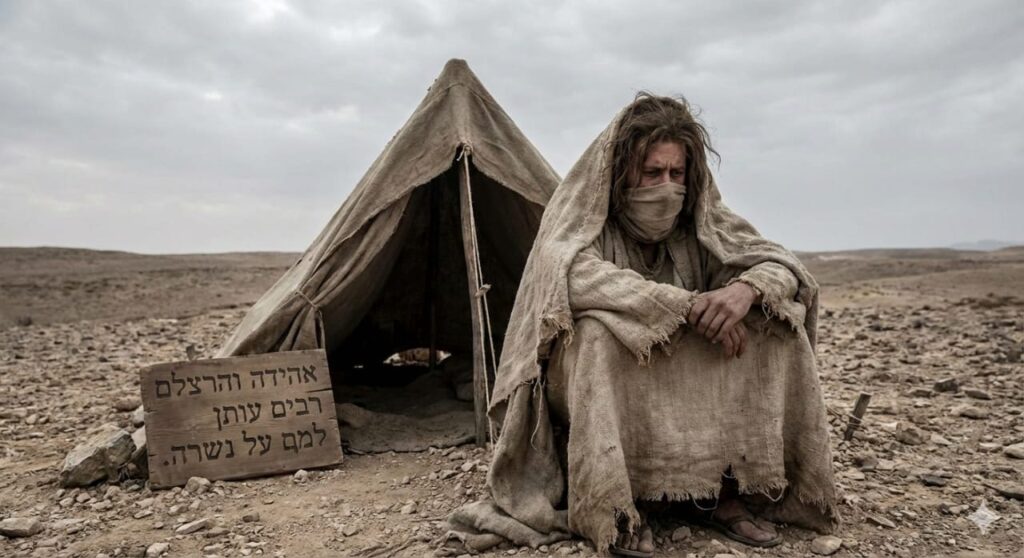
The leper’s life was to communicate the reality of his being an outcast. He would wear torn clothes and have his hair hanging loose in order to be easily distinguishable when he was seen in public. He was not to be given any opportunity to hide himself in a crowd of well-dressed, presentable people. He was meant to stand out – in the worst possible way!
Furthermore, just in case anyone approached him unsuspectingly, this leper was to call out ‘Unclean, unclean’! The priority was not his wellbeing but that of those who were ceremonially clean that he was putting at risk of uncleanness. He had to take care that he was not the means of getting others disqualified from being able to worship Yahweh. He was out, and part of his job was to make sure others didn’t join him there. He was to make himself avoidable! It was his job to say in effect, “I’m near you, be careful not to touch me or anything I’ve touched!”
What an isolated and lonely life! The Law reiterates, “He shall live alone. His dwelling shall be outside the camp.” It is almost as if the point of the Law is to deliberately seclude this person. He was kept away from God, from his family and friends and in the end, he would die completely alone! To contract this disease was basically to receive a death sentence; as Ryle says, “He that has it is like one dead while he lives”![1]
You would say that this has already added plenty of depth to how we see this leper, but that is not all. Let us attempt to view his life from the perspective of the rest of the community. To them, this person posed a great threat. With a touch, he could keep them from being able to participate in community life and the worship of Yahweh, whether temporarily or indefinitely should he transmit the disease to someone! It was in one’s best interest to avoid him, shun him and even despise him!
As we return to this particular leper as he approaches Jesus, we are now equipped to better empathize with him. While we do not know how long he has had this disease, we can understand that he has suffered incredibly. Can he even remember the last time he got a hug or was even able to touch another person who wasn’t a leper? When was the last time he had shared a meal with his family? When was the last time he had glimpsed the Temple, let alone approached it for the worship of Yahweh? Had anyone cast a kind glance or word at him since his diagnosis was confirmed? Or was he treated worse than a stray dog – despised and shunned, possibly threatened with violence for merely existing and having a disease that he did not choose?
Imagine him then as he overhears, in the byways of Galilee, about this man who could heal people of all sorts of diseases. Perhaps he had even seen one of the many people Jesus had healed, restored and reunited with their family – no longer an outcast like he was. It was then that he had determined that he must go to Jesus himself, no matter the risk! He was in need and Jesus could help him. And so, according to Matthew’s testimony, he approaches Jesus after His Great Sermon on the mountainside. Despite the fact that Jesus is followed by a great crowd, this man is desperate enough to risk everything for a chance at restoration!
He kneels at Jesus’ feet and says simply, “Lord, if you will, you can make me clean.”

It’s as though time stands still. The crowd behind Jesus steadily stops and starts to grow quiet as people seek to understand why those ahead of them have stopped moving. Three rows in, no one can see what exactly has Jesus’ attention as it seems to be at His feet. Any attempt to nudge people forward is met by uncanny resistance! It’s as though people can’t move forward. Perhaps a whisper is passed back from sneering faces, “It’s a leper on the road!”
Does the leper have enough strength left to lift his gaze and look at Jesus? Or does he merely look at his feet with bated breath as he waits to hear how He will answer. He knows that Jesus is surely able to help him, but does He want to? Is he willing?
Jesus, for His part, has just come from preaching a long sermon on the mountainside. He has preached about His kingdom and what His kingdom is about; He has revealed what He and the Father stand for. He may be a little weary from the work and looking forward to getting back to Peter’s home for some rest. But He also knows the work isn’t done. He is not done teaching about the Kingdom of heaven and what kind of King He is.
He had been watching for the leper. He knew he would come and seek Him out. It had been determined even before the beginning began. He watches for his crouched figure on the side of the road. Sees him set his shoulders determinedly and step out onto His path. He watches as he kneels at his feet ready to make his simple ask. He knows the fear that beats in this leper’s chest; knows the mix of desperation and hope that sits like a tight ball in the pit of his stomach. For the leper, it’s all unknown, all uncertain. But Jesus knew the answer as surely as He knew the leper would come!
You see, Jesus knows this man. He made him. He wrote his story – hard and sorrowful as it has been so far. He also wrote Himself into this man’s story, or rather, wrote this man into His Big Story! He chose him from before the beginning that He would meet the Incarnate Son and be an incredible tool to exemplify the King’s power and the greatness of His love and concern for His people, as well as show the kind of people that the King wants in His kingdom! He’d been looking forward to this day.
And so as He looks down at this man, He takes in his physical and spiritual state. He sees all that the leprosy represents – the brokenness of this world, the costly consequences of sin, the corrupted fruit of man’s rebellion against God. He also sees just how much this man has had to carry: the sorrow, the grief, the loneliness, the contempt. He has borne in part the judgement of God in his affliction and rejection. It is for him and for such as him that Jesus stepped into time. It is time to reveal His heart to this man and the watching crowd!
Jesus then looks upon him with compassion[2], stretches out his hand, touches him and says, “I will; be clean.” And immediately, his leprosy was cleansed!
Was there a gasp from the on-looking crowd as Jesus reaches out and touches this unclean man? Was there wonderment at the ‘folly’ of this great teacher – who would dare touch a leper? Did he not know what the Law said? Were there a few whispers behind covered mouths, “What has he just done?”
But wait. . . the leper’s sores are gone? What just happened?
Well, this man who had taught them so authoritatively up that mountain (Matt. 7:29) also has incredible power to prove His words. He powerfully proclaims His kingdom with this sign!
Jesus is no ordinary king, but the Greatest King there is. He is the King who has power over diseases. But more than that, He is able and willing to make clean what is unclean; He is able to qualify people to approach and worship God. This pitiful man, unclean and unkempt, an outsider from the people of Israel receives the King’s attention and deliberate care. The King wants to do him good and does it powerfully!
Did the former leper look up at Jesus’ touch? Was he fearful that he may have contaminated Him? Or was he more perplexed by the quickness of his body being made whole? Did he immediately rise from his knees and begin to examine his skin – to confirm that those itchy, painful sores were indeed gone?
What joy must have filled his heart! He was really restored!!! Did his heart begin to sing praises to God?
Jesus looks on him and says, “See that you say nothing to anyone, but go, show yourself to the priest and offer the gift that Moses commanded, for a proof to them.”
While this man has been healed, his full restoration must happen through the confirmed testimony of a priest. He must go and show himself to the priest and make the appropriate offerings according to the Law of Moses (cf. Lev. 14:1-32). Jesus seems to hurry him along. He truly wants him to be restored to worship and community!
Four short verses in Matthew’s account can yield so much for us. We see the power and heart of the King. He is not only powerful, but He uses this power for the benefit of the weak and the outcast. In the agony of a broken world, the Son of God comes and offers compassion to those who cannot help themselves and reveals a glimpse of His great rescue mission.
To have spoken a word of healing would have been enough to heal the leper but Jesus goes further to touch this unclean man. Jesus does not just get down and dirty with him, empathizing and identifying with his humanity; He actually takes on this man’s uncleanness and gives him His cleanness! A few verses after this story, Matthew concludes the section by writing that, “This was to fulfill what was spoken by the prophet Isaiah: “He took our illnesses and bore our diseases.” (Matt. 8:17).
He is quoting Isaiah 53:4 that speaks of the Suffering Servant who will take upon Himself the brokenness of this world for the sake of the people of God. Matthew identifies Jesus as this Servant. He is the Servant King! The One who comes in seeming ordinariness to be despised and do the incredible work of saving God’s people by bearing their sicknesses, griefs and sorrows and ultimately being crushed for their iniquities (53:4-5). In this He was doing the will of God (53:10) in order for many to be accounted righteous (53:11).
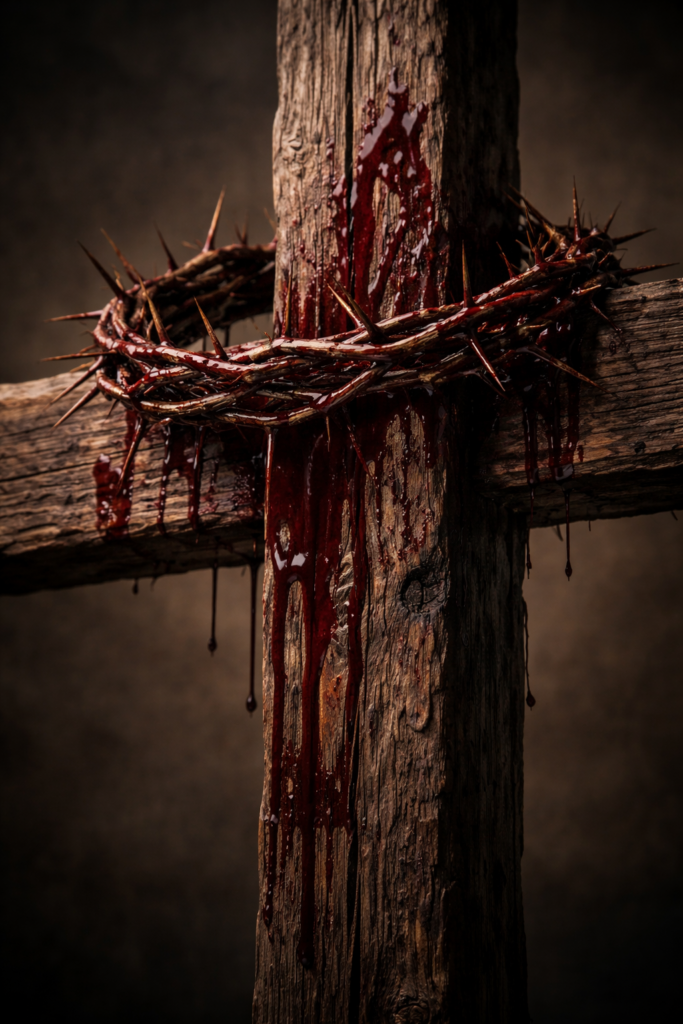
What Jesus has done here, in Matthew 8 is already casting the shadow of the Cross. By touching the leper, He shows that He is on the path that leads Him to being pierced and crushed for the iniquities of sinful men.
It may have been in the minds of those on-lookers that they were not in so bad a shape as that leper; they were, in their minds, better than him. We might even dare to think the same thing. But in reality, that leper merely wore on his skin, what we all wear on our souls – a sickness that cannot be healed, except by a work of God. Like him, we all deserve to be cast away from the worship of Yahweh and cut off from his people. As rebels and sinners against God, we deserve only His judgement and condemnation.
Yet, in the face of Christ, we see God giving us what we do not deserve. Rather than judgement, Jesus offers us grace and compassion! He willingly offers to use His great power to cleanse us from our sins and the penalty for it. This King chooses wretched sinners for His Kingdom!
What are we to do with this? We are to be like the leper and COME TO JESUS! We ought to be those who despair at their condition in knowledge and acknowledgement that we cannot save ourselves and so are to run to Jesus and fall at His feet and ask Him to cleanse us. We are to believe that Jesus is powerful and willing to help us and we are to come to Him as those weak and lost and find the deliverance, relief and restoration that we seek. This is our great privilege! Be wise, and make the most of your privilege! Embrace the kind gift Jesus offers poor, weak, wretched sinners!
[1] Ryle, J. C, Expository Thoughts on Matthew, The Banner of Truth Trust, 2012. First published 1856. p60.
[2] Mark 1:41

